






It’s been a tough few years with the rise of popularism around the world in politics but suddenly there’s been a massive shift.
Usually I write about a gender equal world on International Woman’s Day A world free of bias, stereotypes, and discrimination. A world that’s diverse, equitable, and inclusive. A world where difference is valued and celebrated. Together forging women’s equality. Collectively embracing equity. #EmbraceEquity.
(IWD) is a global celebration of the social, economic, cultural, and political achievements of women. Each year, there is a day that serves as a powerful reminder of the progress made towards gender equality and highlights the work that still needs to be done.
But suddenly the stepping down of Joe Biden and the stepping into her stride comes Kamala Harris who is inspiring girls around the world to become leaders.
She is changing the aspirations of hundreds of girls from around the world, not only as the daughter of a Jamaican father and an Indian mother, both of whom immigrated to the U.S. during the Civil Rights Movement, but all girls who aspire to be leaders in any profession.

In a world where representation matters, Kamala Harris has emerged as a beacon of hope and inspiration for girls everywhere. As the first female Vice President of the United States, she has shattered numerous glass ceilings, proving that women can indeed achieve anything they set their minds to.
Harris’s journey is not just her own; it’s a shared victory for every girl who dares to dream big.
Seeing Kamala Harris on the global stage is more than a historical milestone; it’s a powerful message to girls that their dreams are valid and achievable. Harris’s story is one of resilience, ambition, and unwavering determination. Her diverse heritage—being the daughter of Jamaican and Indian immigrants—resonates with many, making her a relatable figure for girls from all backgrounds.
Her achievements are a testament to the importance of perseverance, hard work, and the belief that a person’s gender or background should never be a barrier to success. This visibility helps girls envision themselves in roles of power and influence, fostering a sense of belonging and possibility.
As parents, we have a crucial role in shaping how our daughters perceive themselves and their potential. One significant shift we can make is changing the narrative around assertive behavior in girls. Too often, girls are labeled as “bossy” when they exhibit leadership qualities. This term carries negative connotations that can discourage girls from taking charge and expressing their ideas confidently.
Instead, let’s celebrate these traits as signs of emerging leadership. When your daughter takes the lead in organizing activities, makes decisions, or voices her opinions, recognize and encourage her as a “leader in the making.” Reinforce the idea that leadership is not just about giving orders but about being empathetic, responsible, and inspiring others.
Here are some ways to foster leadership qualities in your daughter:
Model Leadership:
Be a role model of strong leadership yourself. Demonstrate how to lead with integrity, empathy, and respect. Share stories of female leaders, including Kamala Harris, to provide tangible examples.
Provide Opportunities:
Encourage your daughter to take on leadership roles in school, sports, or community activities. Support her in pursuing her passions and standing up for what she believes in.
Celebrate Her Strengths:
Acknowledge and praise her leadership qualities. Use positive language that reinforces her ability to lead. For instance, instead of saying, “Stop being so bossy,” try, “I love how you’re taking charge and organising things.”
Help her develop critical thinking and problem-solving skills. Encourage her to find solutions and make decisions independently, fostering confidence in her judgment.
Teach your daughter that challenges and failures are part of the journey to success. Encourage her to view setbacks as opportunities to learn and grow, just as Kamala Harris has navigated her career with resilience.
Kamala Harris’s rise to one of the highest offices in the world is more than a political achievement; it’s a profound inspiration for girls everywhere. Her journey shows that with hard work, determination, and support, girls can become leaders who make a difference.
As parents, let’s commit to changing the narrative around our daughters’ assertiveness. Let’s nurture their leadership qualities, celebrate their strengths, and empower them to envision themselves as future leaders. By doing so, we not only honour Kamala Harris’s legacy but also pave the way for a new generation of powerful, confident women ready to lead the world.
Together, we can inspire our daughters to dream big, aim high, and lead with confidence. Let’s show them that they are not just “bossy girls” but leaders in the making, ready to change the world.

As a parent how can you model gender equality in the way to speak & act around female opportunities & leadership – as kids are watching, listening & learning from you all the time?
How can you change the narrative from your daughter being ‘a bossy girl’ to a ‘leader in the making?’
🎈What does gender equality mean to you?
🎈In your opinion, do you think gender inequality still exists in our society?
🎈How do you think we can promote gender equality in the workplace?
🎈Have you ever witnessed or experienced gender discrimination? Can you tell me about it?
🎈How do you think gender stereotypes affect our society and culture?
🎈What can we do to encourage young people to embrace gender equality?
🎈How do you think media and popular culture influence our perception of gender roles and expectations?
🎈What are some ways that we can support and empower women and girls in our community?
🎈How can we raise awareness and advocate for gender equality on a global scale?
🎈What do you think are the most pressing gender equality issues facing our society today?

What do you think boys and girls can both do well?
This question encourages children to think about the capabilities of both genders and promotes the idea of equal abilities.
Have you ever noticed any differences in how boys and girls are treated at school or home?
This can help identify any biases or different treatments and open up discussions on fairness and equality.
Can you name some jobs that you think both men and women can do?
Encourages children to consider gender equality in various professions and roles.
Why do you think it’s important for both boys and girls to have the same opportunities?
Helps children understand the value of equal opportunities for all genders.
Can you think of a girl or woman you admire and why?
Promotes positive female role models and allows children to express admiration for women’s achievements.
What do you like to play or do, and do you think those activities are for boys, girls, or both?
This question challenges gender stereotypes related to hobbies and interests.
How do you feel when someone says, “Only boys can do that” or “Only girls can do this”?
Encourages children to reflect on and discuss their feelings about gender stereotypes.
Why is it important for everyone to be treated the same, whether they are boys or girls?
Helps children understand the concept of equality and fairness.
What can we do to make sure both boys and girls feel included and respected?
Encourages children to think about actions they can take to promote inclusivity and respect.
Have you heard of any famous women who have done great things? Can you share what you know about them?
Introduces children to influential women and helps them learn about their contributions and achievements.
These questions spark meaningful conversations about gender equality in an age-appropriate manner, fostering a sense of fairness and respect in young minds.
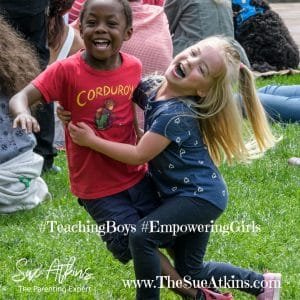
Let’s not to forget to ask out sons the same questions!
